Arxiu de l'autor: Entitats Manlleu

La Llumineta dels perruquers d’Osona contra el càncer

La campanya durarà fins al 30 de setembre i el guanyador serà el número que coincideixi amb el número guanyador del sorteig de l’ONCE del 29 d’octubre. La casella de la llumeneta que coincideixi amb les dues últimes xifres del número premiat, guanyarà un tall de cabell gratuït que regalarà cada perruqueria. En l’àmbit de tot Catalunya el guanyador rebre un premi de 1.000 euros que donarà la FEDCAT.


Cada una de les 100 perruqueries de l’Associació de Perruquers d’Osona comptarà amb una llumeneta. 100 caselles, amb una aportació mínima d’un euro per casella que es donaran per a la recerca contra el càncer. La iniciativa a Osona compta amb el suport d’Osona contra el Càncer i en l’àmbit català es farà sota l’aixopluc de la Federació Catalana de Perruquers.


D’aqueta manera tots els fons recaptats es donaran per a la lluita contra el càncer. Aquesta és una de les accions conjuntes que duu a terme l’Associació de Perruquers d’Osona.

Introducing: A Diverse, Free Stock Photo Library

As many site creators know, it’s daunting to find images to represent the message you’re trying to put out into the world — especially if you don’t have the equipment or time to make your own.

At WordPress.com, we’re constantly striving to make it as easy as possible to create beautiful websites that represent who you are and what you stand for. We’re excited to announce that we’ve been working hard with Pexels and other diversity-focused image-library partners so that everyone with a WordPress.com or Jetpack-connected site can realize their vision with the right stock photos.

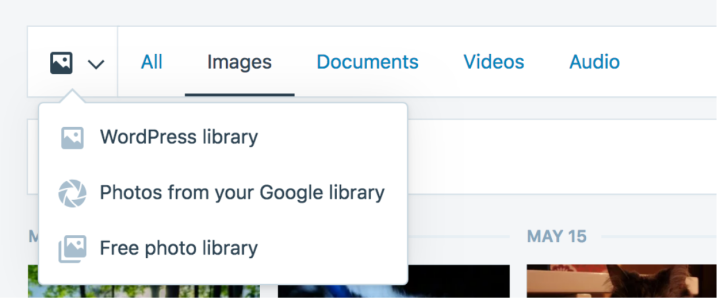
To use these images, just head to your Media Library and select Free Photo Library before searching for any image you need. You can also do this from the Add Media option within a post or page:

Screen Shot 2018-08-01 at 7.28.04 PM.png

Free images representing a wide range of experiences

In January 2018, we collaborated with Pexels to integrate their free stock-image library into WordPress.com. Since then, every user has had access to thousands of free, high-quality images at their fingertips! Knowing how diverse our community is, however, we didn’t stop there.

Stock-image libraries have historically struggled to represent all experiences, and often excluded photos of people of color, people with disabilities, or non-binary individuals. Pexels is working to change that, and since partnering with them we’ve helped incorporate diversity-focused libraries to their collection. Ultimately, we believe it’s on us to help find a solution to this problem, and avoid generic stock images that often perpetuate stereotypes.

Our first partner in this effort was the Women of Color in Tech Stock Photos library (WoCinTech for short). We were thrilled to work with them, as they were an earlier driver for these efforts. Christina Morillo, one of the project’s co-founders, had this awesome message to share:

We started this collection to address the lack of visible representation of women of color engaging in technical tasks in stock images. Our mission was always twofold: Disrupt stock images and further representation of women/non-binary people in technology by making the photos accessible to all creators. We are thrilled to partner with Pexels and WordPress.com to further this mission and help creators like you represent who and what you stand for.

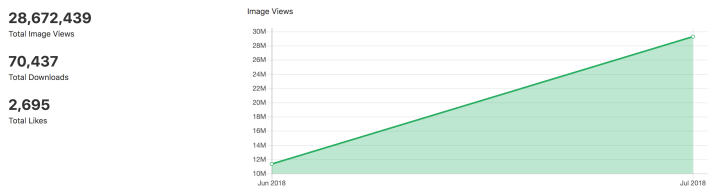
Since adding their brilliant photos to Pexels, we’ve seen their stats soar with more than 70,000 downloads and 28 million image views:

Screen Shot 2018-08-01 at 7.28.59 PM.png

These statistics show how great the need and desire are for truly representative images online. What started out as a passion project of the WoCinTech group has now reached more than 70,000 people in the span of a month. Since we introduced the free stock image library, WordPress.com users have already downloaded more than 1 million photos.

computers-laptops-office-1181232

Going forward, we’re thrilled to work with Pexels to bring other diverse image-library partners on board, and to expand the selection of images you can access.

We need your help

We’re continuing to add more image libraries! This is where we could use your help:

  • Suggest in the comments below image libraries that we should reach out to that will help expand our offerings.
  • If you’re a photoblogger, upload your images to Pexels and immediately have them available for other WordPress users to find.
  • Become a part of future diversity-focused photo challenges on Pexels like this recent one from Pride Month.
  • If you’re a blogger or site owner, make an effort to use more diverse images when sharing content on your site.
  • If your company provides images for customers to use, we recommend integrating with Pexels to give your customers access to a library dedicated to diversity in images.
  • If you run an image library offering diverse images, comment below and we’ll get in touch with you!

Happy WordPress-ing! 🙂

Photos by Christina Morillo of WOCinTech from Pexels

Convocatòria de subvencions per a la contractació de joves en pràctiques

S’ha obert una nova convocatòria de subvencions per a entitats, destinada a incentivar la contractació en pràctiques de persones joves beneficiàries del programa Garantia Juvenil. Les entitats que es vulguin beneficiar d'aquesta subvenció han de tenir com a mínim una persona contractada.

Trobareu més informació al següent enllaç. El termini per a presentar telemàticament la sol·licitud de subvenció finalitza el 7 de setembre.

http://serveiocupacio.gencat.cat/ca/detall/article/Contractacio_practiques_GJ_2017

Aquest ajut, promogut pel Servei d’Ocupació de Catalunya, va destinat a la contractació en pràctiques de joves amb formació que tinguin entre 18 i 29 anys i que compleixin les condicions per ser beneficiaris del Programa de Garantia Juvenil, per tal de prestar els seus serveis professionals durant 6 mesos.

Les entitats interessades poden adreçar-se al servei d'OPE Feina a l'Àrea de Serveis a les Persones i Promoció Econòmica,on us ajudarem tant per la tramitació de la subvenció com per a la recerca de persones candidates:

OPE Feina
Edifici Can Puget. Plaça de dalt Vila, 1. Manlleu
93 851 50 22 | opefeina@manlleu.cat


Podcasting on WordPress.com

It’s no secret that we’re big fans of podcasts — their beautiful storytelling and engaging news delivery add a whole new dimension to the media landscape — and podcasters. We happily support podcast creators, from sponsoring events like Podcast Movement to supporting embeds from services like RadioPublic.

Did you know that WordPress.com allows you to host your own podcast, right from your WordPress.com website? And we’ve recently updated our podcasting tools, simplifying the process of starting or managing your podcast. Whether you’re about to hit “record” on your first podcast or have used WordPress.com for your podcast for years, we think you’ll love these updates.

Configuring Your Podcast Channel

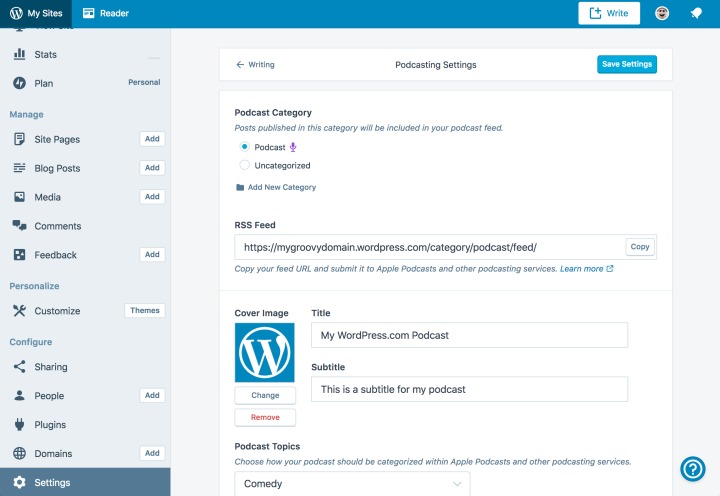
We’ve redesigned the Podcasting Settings page to be faster and more intuitive. Visit Settings > Writing > Podcasting to set up and manage your podcast channel. Pick a podcast category, add details like your podcast’s title and cover image, and you’re ready to go.

podcast-settings.png

The new Podcasting Settings page.

Creating and Editing Podcast Episodes

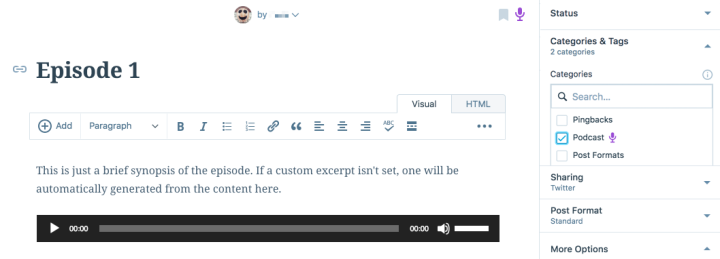
The post editor also got some new indicators to make it more apparent when you’re creating or editing a podcasting episode. To publish an episode, create a new post, assign it the podcast category you designated on the Settings page, and upload or embed an audio file.

podcasting-episode

A podcast episode in the post episode.

Added Support for Google Play, Spotify, and Alexa

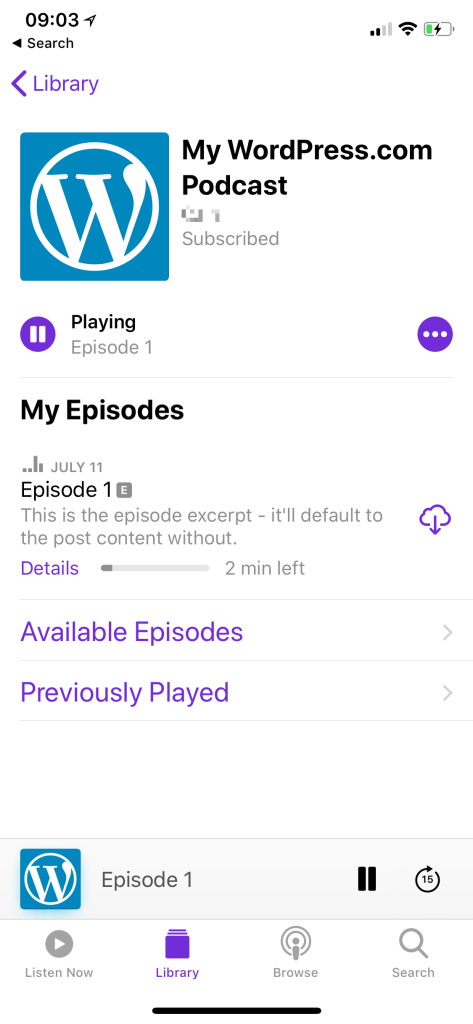
Behind the scenes, we’ll do the heavy lifting to support services like Apple Podcasts, Google Play, Spotify, and even Alexa Daily Briefings. Submit your feed to each service once, and then publish episodes whenever inspiration strikes! We’ll make sure every episode gets listed.

apple-podcast

My first episode on Apple Podcasts!

Podcasts can add a new dimension to any site — and they encourage visitors to subscribe and return frequently.

If you have requests for other updates to our podcasting tools, let us know in the comments! We’ll continue to refine our podcasting support. In the meantime, you might want to check out some of these great podcasts that are already hosted on WordPress.com:

  • Bundyville: “A never-before-heard chronicle of the rise, fall and resurgence of the Bundy family, the armed uprisings they inspired and the fight over the future of the American West.” – from Longreads, in partnership with Oregon Public Broadcasting.
  • You Are Not So Smart: “A show about psychology that celebrates science and self delusion.” – hosted by David McRaney.
  • You’re Wrong About…: A podcast “about historical events or famous people that the public has forgotten or misremembered” – hosted by Michael Hobbes and Sarah Marshall.
  • Hilltown Family Variety Show: A community radio show from Western Massachusetts that’s been around since 2007!

Sharing Options from WordPress.com to Facebook Are Changing

We wanted to update you about an upcoming change Facebook is introducing to their platform, and which affects how you may share posts from your WordPress.com website to your Facebook account.

Starting August 1, 2018, third-party tools can no longer share posts automatically to Facebook Profiles. This includes Publicize, the tool for WordPress.com and Jetpack-powered sites that connects your site to major social media platforms (like Twitter, LinkedIn, and Facebook).

Will this affect your ability to share content on Facebook? It depends. If you’ve connected a Facebook Profile to your site, then yes: Publicize will no longer be able to share your posts to Facebook. On the other hand, nothing will change if you keep a Facebook Page connected to your site — all your content should still appear directly on Facebook via Publicize. (Not sure what the difference is between a Page and a Profile? Here’s Facebook’s explanation.)

If you’ve previously connected a Facebook Profile to your WordPress.com site and still want your Facebook followers to see your posts, you have two options. First, you could go the manual route: once you publish a new post, copy its URL and share the link in a new Facebook post. (You can also share right from the WordPress mobile apps after a scheduled post goes live.)

The other option is to convert your Facebook Profile to a Page. This might not be the right solution for everyone, but it’s something to consider if your website focuses on your business, organization, or brand.

While Facebook is introducing this change to improve their platform and prevent the misuse of personal profiles, we know that this might cause a disruption in the way you and your Facebook followers interact. If you’d like to share your concerns with Facebook, head to their Help Community.

In the meantime, WordPress.com’s Publicize feature (and social media scheduling tools) will continue to be available to you for posting to Twitter, LinkedIn, and other social media platforms.

Welcome Atavist! A Groundbreaking Publishing Platform Joins the WordPress.com Family

Today we’re announcing that Atavist, a multimedia publishing platform and award-winning magazine, will be joining WordPress.com parent company Automattic.

This news is exciting to me on a few levels — eight years ago I had my first introduction to Atavist when I met a journalist named Evan Ratliff for coffee at Housing Works in New York. He showed me the first pieces of what became a bold new platform for long-form storytelling, which he created with co-founders Jefferson Rabb and Nicholas Thompson. At the time I had just started Longreads, so we shared an interest in seeing a revival for long-form journalism on the open web.

Fast-forward to today and we’re thrilled to have the Atavist and Longreads teams now together under the WordPress.com banner. Atavist’s publishing platform will be moving over to WordPress, and its award-winning magazine The Atavist will continue to serve up outstanding in-depth storytelling with a new feature each month, under the editorship of Seyward Darby. Also joining the team is Atavist CEO Rabb and head of product communications Kathleen Ross.

I chatted with Rabb, Darby, and Ross about what’s next.

Jeff, Seyward, Kathleen, we’re excited you’re here! You’ve had a terrific run over the past eight years — leading innovation around the design and process of multimedia storytelling, winning many awards along the way — what are your hopes and priorities for Atavist moving forward?

RABB: Thank you, I’m thrilled to be here! My number one hope in joining [WordPress.com parent company] Automattic is to bring everything we have built and learned to an audience that is orders of magnitude larger. I’ve spent the past eight years honing a toolset and sensibility for digital journalism, and now I’m excited to put this to use for a mass audience. When these are integrated into WordPress, I am hoping we will have an unbeatable product for storytelling and journalism. There are many fascinating challenges and problems in journalism today, and now more than ever I want to be part of the solution.

DARBY: I’m also excited to be here! I’ve been at The Atavist Magazine for the last 15 months, and it’s the best job I’ve ever had. The list of things I love about our publication is too long to include in full, but some highlights are the intimate collaborations with creators, the anchoring belief in the timeless power of cinematic storytelling, and the commitment to nurturing the next generation of long-form writers. Certainly, we work with big-name journalists, but we’re also a magazine that supports up-and-coming narrative writers who want to take a swing at a really, really big story. I love nothing more than helping someone crack the code on a 15,000-word feature’s complex structure. (I’m a big fan of Post-It notes and story trees, and of fist-pumping to no one in particular when an article section falls into place.)

Moving forward, the magazine’s foundational priorities will remain the same: We’ll tell great stories, design them beautifully, treat our collaborators well, and have a lot of fun in the process. My hope is that, by combining forces with WordPress.com, we’ll get to push the boundaries of our projects: dive into more multi-part narrative investigations, produce more original video or audio where it makes good sense, improve the diversity of our roster of writers and artists, and provide journalists with the resources and time they need to report the hell out of topics they’re passionate about.

Winning awards and getting our stories optioned for film/TV, which we also have a strong track record of doing, will be goals, absolutely, but never at the expense of providing a quality experience to every person who contributes to or reads The Atavist.

Tell us about some of your favorite stories you’ve hosted.

DARBY: I’m proud of every story I’ve shepherded as the executive editor, so it’s hard for me to pick favorites. The most successful Atavist stories share the same key ingredients: a propulsive, satisfying narrative, rich characters, and scenes that make readers feel immersed in the world the writer is describing. At first blush, Kenneth R. Rosen’s story “The Devil’s Henchmen,” about what is being done with the bodies of the ISIS dead in Mosul, doesn’t seem to have much in common with Amitha Kalaichandran’s “Losing Conner’s Mind,” about a family’s quest to save a child from a rare, fatal disease; Allyn Gaestel’s “Things Fall Apart,” about an over-hyped art installation in Nigeria; Mike Mariani’s “Promethea Unbound,” about the tortured life of a child genius; or David Mark Simpson’s “Not Fuzz,” about a millionaire hotelier who moonlights as a serial police impersonator. Yet these stories all have compelling plots about everyday people whose lives are shaped by sheer will and unpredictable circumstance. You can’t put them down because you want to know what’s going to happen.

As for Atavist stories that predate my time at the magazine, I’ll award a few superlatives. Quirkiest goes to Jon Mooallem’s “American Hippopotamus,” about a bizarre plan to alter the national diet. Most Lyrical goes to Leslie Jamison’s “52 Blue,” about the world’s loneliest whale. Most Ambitious goes to Evan Ratliff’s epic “The Mastermind,” about a crime lord whose empire spanned pretty much the whole world. (It’s soon to be a book and TV show.) And Couldn’t Get It Out of My Head goes to Will Hunt and Matt Wolfe’s “The Ghosts of Pickering Trail,” about a family living in a haunted house. I’ll stop there, but I really could go on and on.

ROSS: Before I worked for Atavist, I actually worked right down the hall, so I have been reading the magazine for a long time. To me, the best Atavist Magazine stories are transporting: in “Welcome to Dog World,” Blair Braverman shows us Alaska; socialites head to Sioux Falls, South Dakota, for an early feminist victory in “The Divorce Colony” by April White; and James Verini’s “Love and Ruin” (the title story of our 2016 collection) is a romance and historical epic all in one, and I think about Nancy Hatch Dupree’s library in Afghanistan often. “A Family Matter” may be one of the most important stories we’ve done. Finally, I love stories about spectacular failures, so I have to mention Mitch Moxley’s article “Sunk,” which is about a disastrous attempt to make an epic movie about mermaids; plus, the piece has some excellent moments of maximalist design, including pixelated fish that bob across the page.

RABB: I have a soft spot for the very first stories such as “Lifted,” “Piano Demon,” and “My Mother’s Lover.” In addition to being great pieces of writing, they were the petri dishes in which our experimental approach to storytelling was born. They included ideas such as pop-up annotations, maps, and immersive sound elements. Even though the way we distribute our articles has changed dramatically since those stories were published—back then, they were exclusively on the Atavist mobile app and Kindle—many of the concepts and approaches in them formed the DNA of our company’s product. Developing those first few stories was an exciting and vital time for me.

Finally, I’m wondering what you think about the state of storytelling on the open web today. Where do you think things are headed?

DARBY: There are so many stories being told in the digital space right now, in so many ways, and to so many different audiences. Take SKAM Austin, which D.T. Max recently wrote about for The New Yorker. It’s a teen drama told entirely through Facebook posts, Instagram stories, texts, and other digital scraps and marginalia—a story crafted for its young target audience, based on the way they consume information and communicate with one another. That project is fictional, but there’s similar experimentation happening in the non-fiction space. Certainly, publications are pushing the envelope on transmedia (multi-platform storytelling) and rethinking story structure based on how events now unfold in real time in the palm of your hand. I’m thinking of projects like WIRED‘s story on police brutality, “How Social Media Shaped the Three Days That Shook America,” and National Geographic‘s partnership with ProPublica, “How the U.S. Triggered a Massacre in Mexico.” Recently, I was a fellow at the Sundance Institute’s New Frontier Lab, an incubator for storytellers who work with emerging technologies like VR, AR, and AI. It was incredible to hear the ways that this diverse group is reimagining how to create and deliver narratives. I can’t wait for all of the projects they were workshopping to be out in the world, and I hope to bring what I learned there to bear on my work at Automattic.

That said, I’m a journalist first, and when it comes to technology, I always have this nagging fear that form might compromise substance. No one should tell a story entirely via social media or VR or video just because they can; they should do so because there’s actual benefit—to the story itself, to the audience reached, and so on. I’m reminded of my very first job out of college, back in the aughts. I was a journalist in Eastern Europe and Central Asia, and I also conducted research on media training needs in the region. I met lots of aspiring journalists who said, “This international NGO helped me set up a blog, but I don’t even really know how to conduct an interview or fact-check. Can someone help me with that?” The experience has always stuck with me as a reminder that the basics of great journalism should apply no matter the platform. At The Atavist, we like to say that story comes first, and by that we mean plot and accuracy, then form and reach.
Bookmark Posts with Save For Later

Maybe you’re reading a blog post while sipping your morning tea when you suddenly realize it’s getting late, or you’re browsing on the bus — but you just got to your stop.

The WordPress.com Reader is a great tool for catching up with your favorite blogs or exploring interesting new reads. And now, you can save those posts and resume reading at your leisure with Save For Later.

How does it work?

First, make sure you have the newest version of the  WordPress app on your phone or tablet — version 10.2. Open the app, and head into the Reader.

Saving content for later

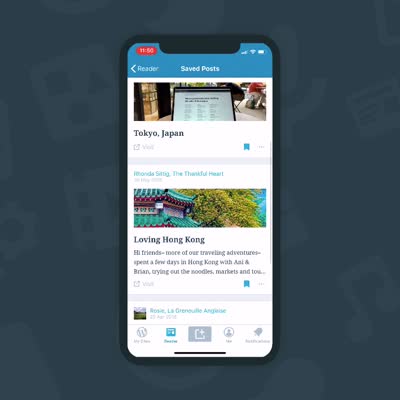
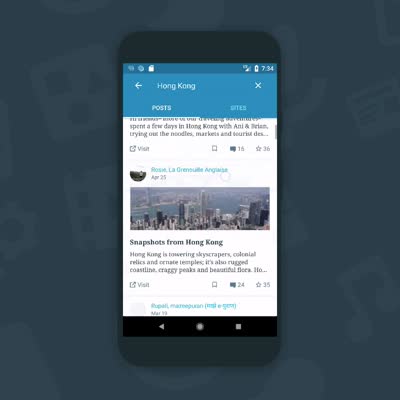
Whenever you find a post you’d like to save for later, tap the bookmark icon (Bookmark outlined). The icon will change from an outline to a solid color (Bookmark solid background) so you know the post has been saved.
Repeat the process as many times as you like! You can save posts from your list of Followed Sites, Discover, Search, or My Likes — anywhere in the Reader.

Reading your saved content

When you’re ready to read, open the app again, go back to the Reader, and select Saved Posts. Everything you saved will be waiting for you there, even if your device is offline.

Once you’ve read a post, you can remove it by tapping the bookmark icon again.

A few other notes

In this initial release, images aren’t guaranteed to be available offline. More importantly, Saved Posts is currently a device-specific feature — saved posts aren’t synced between devices or the web, so they’re only available on the device where you saved them. Logging out or uninstalling the app will delete them.

Give feedback and get involved

The WordPress mobile apps are free and available on both Android and iOS.

If you have any questions or feedback, reach out to our in-app support team by tapping Me → Help & Support → Contact Us.

If you’re a developer and would like to contribute to the project, learn how you can get involved.

Happy reading, now or later!


save-for-later-ios
save-for-later-android

Field Notes: WooCommerce Workshop for Women

Automatticians, the people who build WordPress.com, participate in events and projects around the world every day. Periodically, they report back on the exciting things they do in the community.

Members of Automattic’s Happiness team have traveled to Southeast Asia three times since last September to meet people in communities across the region. Our goal? To encourage people based in South Asia to apply to join us in supporting WordPress.com, WooCommerce, and Jetpack users.

In January 2018, the Happiness Engineer Hiring team, our Events Team, and Mahangu Weerasinghe, a Happiness team lead, collaborated to take a slightly different approach to recruitment in the region. Automattic is a company that aims to build a diverse and inclusive work environment, yet we’d been seeing significantly lower numbers of women applying from South and Southeast Asia. There are a few efforts in the WordPress community to encourage and empower women to get more involved, and we decided the add our voice by organizing a workshop for women. Our plan was straightforward: a free, one-day workshop to inspire participants to set up an online store for themselves or put their newfound skills to use for clients. We talked about the Membership and Subscription extensions for WooCommerce and the Sensei plugin — invaluable tools for enhancing an online store, setting up recurring payments, and managing memberships.

The first workshop took place in January. We chose Udaipur, India, thanks to its strong WordPress community. We attended WordCamp Udaipur, which was organized by an all-female team, and took the opportunity to staff a booth there while our colleague, Rahul Gupta, gave a presentation about how WordPress helped him put food on the table. The next day, we welcomed 40 women to the workshop, exceeding our expectations and requiring us to bring in extra seats!

After the workshop, we invited the community to join us for networking over tea and chatted again with some of the folks we’d met the day before. While the main focus of our trip was outreach to women, we also wanted to do something for the larger community.


One of the attendees was Digication’s Surbhi Jain, who works on digital literacy and skills in India and runs WordPress workshops for students — including in remote areas — increasing awareness and teaching WordPress hands-on. Surbhi attended our workshop to level up her skills and to network, and she’s been helping us spread the word about our hiring efforts since the event.

From Udaipur we traveled to Mumbai, where we taught an abbreviated version of the workshop to women of the local WordPress meetup community. We invited them to learn about options they could use to turn their online store into a membership site and to create and manage products with recurring payments.


We had such a positive response in India that we decided to try the workshop model in Singapore, a city with a strong technology community. The Happiness Engineer Hiring team, affectionately known as Athena, met up with Leviosa, another Happiness team, to co-host the workshop. Two team members, Kruti Dugade and Rose Pajaroja, led the sessions. Kruti had recently joined Automattic — after attending our visit to the Mumbai WordPress user group in September! Again, we drew from the local WordPress community to find attendees and also reached out to other women-in-tech groups. Just like in India, we had a very positive response.


One of my favorite moments during this trip happened at the networking event directly following the workshop. I was standing in a circle of six women — three young women who worked at a web-design firm together, one woman in her 50s who was running a successful family-powered marketing business, an expat from the US, and me. We chatted for quite a while as they shared the struggles and joys of tech in Singapore. It was fascinating to get a glimpse of their work and lives, and learn about the commonalities and differences in our experiences of navigating both.

Since this series of events, we’ve seen an increase of applicants from the region, both male and female. We’ve already hired two new Automatticians from among the people we met during our trip and hope to welcome more in the months to come.

As we strive to provide world-class support to our customers in South and Southeast Asia, we want our team to reflect as many of the diverse communities across this vast region. If you or someone you know is interested, we’re hiring.

Meeting new WordPress friends in India in Singapore was a wonderful experience. While we don’t currently have plans for similar workshops, we hope to have more opportunities in the future to connect with people from other regions.

VIII Edició dels Premis d’Infermeria Osona Contra el Càncer

El passat dijous, dia 10 de maig, i concidint amb el Dia Internacional de la Infermeria, es va celebrar la “VIII Edició dels Premis d’Infermeria Osona Contra el Càncer”. L’acte va tenir lloc a l’Aula Magna de la Universitat de Vic dins el marc de la jornada organitzada juntament amb la delegació d’Osona del Col·legi Oficial d’Infermeres i Infermers de Barcelona (COIB).

Enguany, la guardonada ha estat la Dra. Emilia Chirveches Pérez com a autora del treball “Perfil del cuidador del pacient quirúrgic amb càncer intervingut al CHVic”. El Dr. Eduard Batiste-Alentorn, vicepresident d’Osona Contra el Càncer, va ser qui va fer entrega del guardó que un any més atorga l’associació i que convoca el Col.legi Oficial d’Infermeres i Infermers de Barcelona.

A la foto, la guanyadora Dra. Emilia Chirveches Pérez, amb la Sra Nuria Puig, del Col.legi d’Infermeres, i el Dr. Eduard Batiste-Alentorn, Vicepresident d’Osona Contra el Càncer.

Manlleu solidària amb Guatemala

El Volcà de Foc de Guatemala va esclatar el diumenge 3 de juny i va afectar especialment a la classe més pobra d’aquest país. Es va disparar cap al cel una columna de cendres a diversos quilòmetres deixant enderrocs en molts pobles en un radi superior a 15 quilòmetres de distància. Els morts superen el centenar i els afectats són 1700000 de persones que han hagut de desplaçar-se.

IMG_20180610_231427.jpg

Des de Manlleu, concretament des de l’Església Evangèlica Baptista, s’ha engegat una iniciativa solidària durant aquest mes de juny per sensibilitzar i recolzar econòmicament als afectats ja que s’estan reunint fons entre totes l’esglésies baptistes de Catalunya i Espanya per enviar-ho directament a pastors evangèlics que es troben a la zona. Una zona de recollida de menjar s’ha establert en el Seminari Baptista de Guatemala on es dirigirà l’ajuda que serà canalitzada. S’ha activat un numero de compte i un correu electrònic per seguir d’a prop les informacions i necessitats que ens arribin.

UEBE EMERGENCIAS: ES27 2100 3456 1822 0015 0062

Més info: eebmanlleu@gmail.com i xarxes socials Església Evangèlica Baptista de Manlleu.

13 de juny: Dia europeu de la prevenció del càncer de pell

Cada any es diagnostiquen i moren 10,7 i 2,4 homes de cada 100000 respectivament i 11,0 i 1,6 dones. Des de 1994, la incidència d’aquest augmenta un 1,8% anual en els homes i es manté estable en les dones. La mortalitat es manté estable tant en homes com en dones, segons dades del Departament de Salut de la Generalitat de Catalunya.

Aquest esdeveniment té com a objectiu sensibilitzar la societat pel que fa a la importància de la prevenció i el diagnòstic precoç del càncer de pell. Més del 80% dels casos de càncer de pell es podrien prevenir si s’evitessin una exposició intensa al sol i les cremades cutànies, especialment durant la infància i l’adolescència.

El Dia Europeu de la Prevenció del Càncer de Pell també pretén conscienciar la ciutadania que qualsevol persona pot patir aquesta malaltia encara que no tingui cap factor de risc.

Pautes per a l’autoexploració

Reviseu-vos la pell regularment:

  • Mireu-vos la cara, inclosos el nas, els llavis, la boca i la part de dintre i del darrere de les orelles.
  • Reviseu-vos el cuir cabellut mitjançant una pinta per separar-ne els cabells en capes.
  • Examineu-vos les mans, tant el palmell com el dors, i també entre els dits.
  • Centreu-vos en el coll, el pit i, en general, en la part superior del cos. En el cas de les dones, mireu-vos la pell que hi ha sota i entre els pits.
  • Aixequeu els braços per explorar-ne la part interna i també les aixelles.
  • Utilitzeu un petit mirall per comprovar l’estat de la pell de la part posterior del coll, les espatlles i l’esquena.
  • Reviseu-vos les natges i la part posterior de les cames
  • Mireu-vos les plantes dels peus i també entre els dits

Què cal buscar?

Tothom té taques a la pell que formen part del procés normal d’envelliment. Malgrat això, de vegades poden esdevenir un senyal d’advertència. Per tant, fixeu-vos si les taques:

  • Canvien de mida, de color i/o de forma.
  • Semblen diferents de la resta de taques.
  • Són asimètriques.
  • Tenen un tacte aspre o són escatoses.
  • Tenen diversos colors.
  • Són de més de 5 mm.
  • Fan picor.
  • Sagnen o supuren.
  • Tenen una superfície brillant.
  • S’assemblen a una ferida però no cicatritzen.

Factors de risc del càncer de pell

  • Tenir més de 50 anys.
  • Haver-se exposat al sol de forma perllongada o intensa.
  • Tenir la pell clara o patir cremades solars amb facilitat.
  • Tenir història de cremades solars durant la infància.
  • Utilitzar cabines de bronzejat.
  • Tenir més de 50 pigues.
  • Tenir-ne antecedents familiars.
  • Haver rebut un trasplantament d’òrgans.

Consells per gaudir del sol i prevenir el càncer de pell

  • Comenceu a prendre el sol de forma gradual, busqueu l’ombra i eviteu l’exposició solar entre les 11 i les 16 hores.
  • Protegiu-vos la pell i els ulls. Porteu barret, samarreta i ulleres de sol.
  • Apliqueu-vos un protector solar adequat al vostre tipus de pell una estona abans de l’exposició al sol (entre 20 i 30 minuts abans). Repetiu l’operació cada dues hores, després de banyar-vos o si sueu molt. També cal que us protegiu els llavis amb filtre solar.
  • Extremeu les mesures de protecció en el cas dels infants. Utilitzeu crema solar amb un factor de protecció alt.
  • Beveu aigua per hidratar-vos.
  • Recordeu que l’aigua i la sorra reflecteixen la llum solar i n’augmenten la intensitat. A la muntanya, l’altitud i la neu també n’incrementen la intensitat.
  • Eviteu exposar-vos el sol si preneu alguna medicació fotosensible a la llum solar.

Font: FECEC